

Conversion Rate Optimisation (CRO) for Personal Injury Law Firms

An injured person hesitates at the button over three doubts, and conversion work for injury firms answers them first: will this cost me anything, do I still have a claim if it was partly my fault, and am I signing up by calling?

Phone, short form and a callback request then sit side by side on one screen.

See the full Conversion Optimisation service·See what we offer personal injury law firms

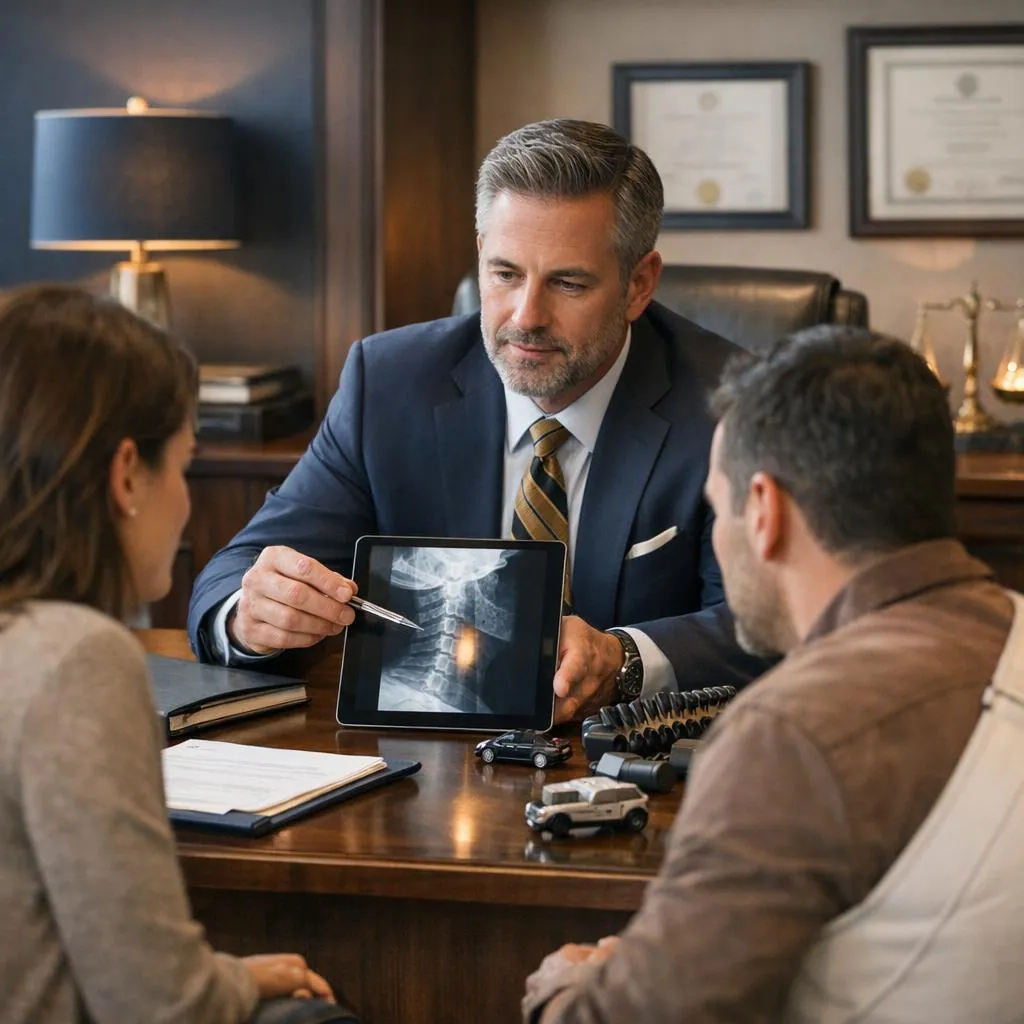
Personal injury lawyer going through the details of a case with a client in an office

Online challenges for personal injury law firms

Before calling an injury lawyer, people worry about cost, about being partly to blame and about being pushed into a claim.

A page that answers none of that beside the button loses many of them.

Clicks are expensive, so the page must match the search

Many firms advertise for injury cases, and a click that lands on a general page is money lost.

  • A search about a road accident should open a page about road accidents, not the home page.
  • The first screen says which cases you take and how to start.
The first reply decides whether the client signs

An injured person may write to several firms on the same day.

  • Who answers, how fast and with what question matters as much as the page.
  • We check where enquiries go outside office hours and how they reach the right lawyer.

Partly to blame, and unsure whether to ask at all

Many injured people think they have no case because the accident was partly their fault, and they leave without asking.

  • A short line near the button saying that shared blame does not always end a claim keeps them on the page.
  • Some want to talk now, some cannot speak and some write at night, and a single way to get in touch serves only some.

Conversion Optimisation approach for personal injury law firms

For personal injury law firms, we test one clear idea at a time on the pages where people are closest to getting in touch, state your limits more clearly and shorten the path for visitors who are ready to act.

Cost, fault and pressure: the doubts before the call

An injured person hesitates over three things: what it will cost, whether a case exists when they were partly to blame, and whether one call commits them to anything.

  • Beside the button we say in one line each that the first assessment is free, if it is, that shared fault does not end a claim by itself where your law says so, and that nothing is signed on the first call.
  • Each of these lines is approved by a lawyer of the firm, since it is a statement about the law.

Three ways to ask, all on one screen

Some people want to talk now, some cannot talk at all, and some would sooner write at night.

  • The page offers a phone button with the hours it is answered, a request for a call back at a chosen time, and a short form, and none of them asks for medical details at this stage.
  • Next to them stand the name and face of the lawyer or assistant who will answer, because people ring a person more readily than a firm.

What the first questions on the phone reveal

With a handful of visits a day, numbers alone will not show what holds people back.

  • We ask whoever takes the calls to note the first question of each caller for a while: if most ask about cost or about fault, the page did not answer it.
  • Then one thing is changed on the busiest page, and it is judged by the share of enquiries the firm accepts, compared over like periods.

Conversion Optimisation process for personal injury law firms

01

Where visitors stop

We look at where visitors leave and read the questions people ask by phone and email before they decide.

02

Doubts answered

We answer the main doubt next to the button and shorten the form or the booking path. For injury firms, cost, fault and pressure are answered right beside the button, and calling, a short form and a message all sit on one screen.

03

One change at a time

We change one thing at a time, because a small site has too few visits for quick tests.

04

Judging the result

We judge a change by the enquiries that follow, and undo it if it brings more enquiries of the wrong kind.

Personal injury case review with the evidence and clear next steps

How we measure results for personal injury law firms

We count calls and forms per page and note which doubts the page left open, judging by what callers ask first.

Questions about Conversion Optimisation for personal injury law firms

Plain answers about Conversion Optimisation, written for personal injury law firms.

On the page for the kind of accident that brings the most visits, opened on a phone.

  • We check how far a thumb travels to the phone button, whether the first screen says which cases you take, and what the form demands.
  • Then we read a sample of recent enquiries to see what people still had to ask.

It can, if the wrong fields are cut.

  • We keep the few that sort cases, namely the date, the kind of accident and whether a doctor was seen, and remove those that only burden the reader, such as a full account of the injuries or the number of an insurance policy.
  • Those details belong to the first conversation with a lawyer.

If you offer one, say it clearly, but together with which cases you assess.

  • The word free alone draws every kind of grievance, from parking fines to quarrels with neighbours.
  • A line under the heading that names the accidents you handle and your region keeps the offer honest and the inbox usable.

Reviews, yes: a short, real one from your Google Business Profile, quoted word for word and marked as such, speaks about how the firm treats people.

  • Results in the form of sums do not belong there, both because of professional rules and because the next reader's case is different.
  • The licence and the name of the lawyer do more than any number.

General questions about Conversion Optimisation, the same for every trade, are in our FAQ.

FAQ: Conversion Optimisation

Need a growth plan for personal injury law firms?

Share your goals and constraints. We will turn them into a practical Conversion Optimisation plan for personal injury law firms.