
Digital Marketing for HVAC Companies
A broken AC or heater can't wait. One heatwave or cold snap brings a flood of calls, to whoever is visible in time.
Emergency repairs, new installations, and maintenance are three searches, each on its own page.
Ad budgets and headlines that follow the weather, not last month's demand.
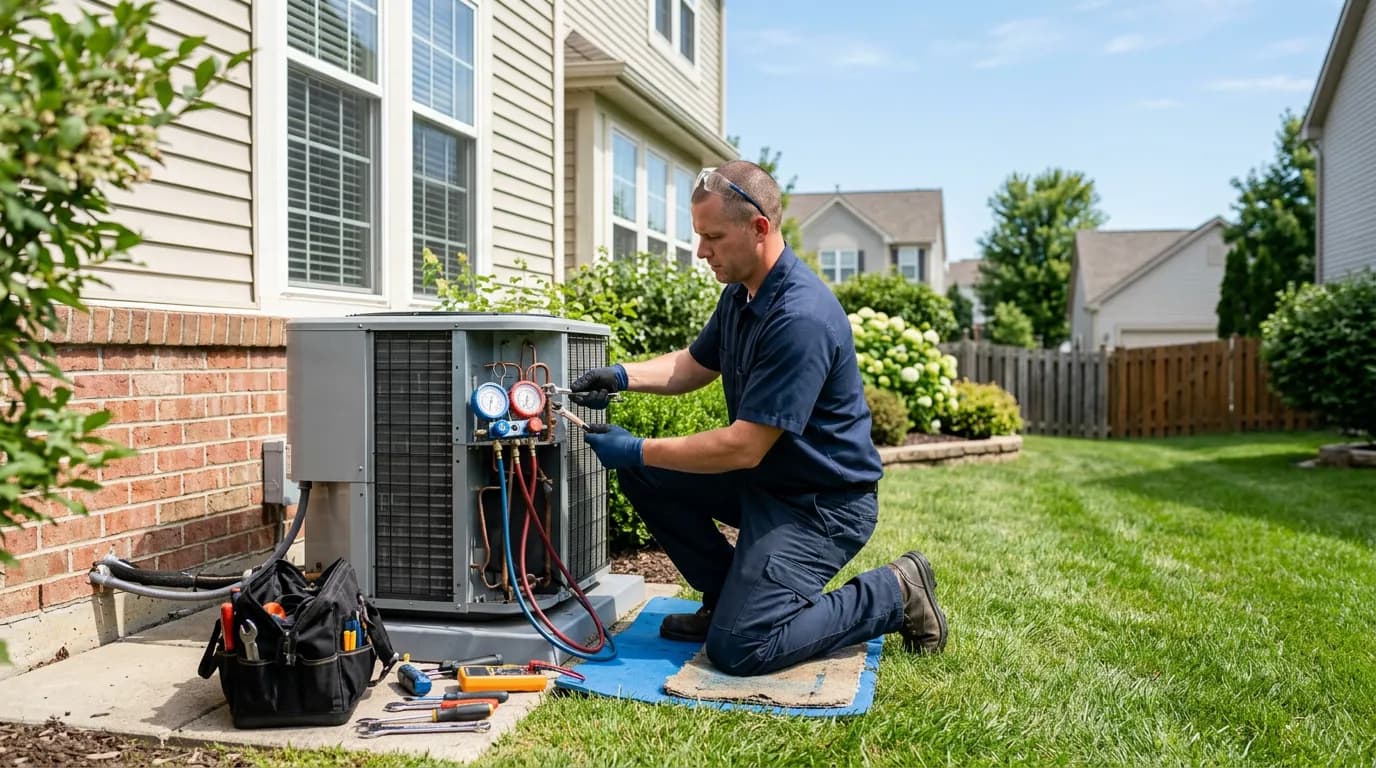
What decides whether HVAC companies get found on Google
The map results and the first screen of your website win most of the jobs. Almost everything else comes after those two.
- Breakdowns follow the weather, so demand for 'AC repair' can surge overnight and vanish just as fast.
- Emergency repairs, installations, and maintenance draw different searches, so one heating and cooling page blurs the high-margin work.
- If ad budgets and pages still follow last month's weather, you buy the wrong clicks at the worst time.
- Signed maintenance plans, not just one-off repairs, are where the steady margin lives.
Heating and cooling breakdowns follow the season and the weather. If your service pages, ad bids and page headlines still match last month’s demand, you pay for the wrong clicks when the first heatwave or cold snap arrives.
With the weather
Ad bids and pages change with a heatwave or a cold snap, aimed at emergency repairs, installations and maintenance plans.
Jobs and plans
We report booked jobs and signed maintenance plans, where the steady margin is.

Our services for HVAC companies
Each card opens the plan of one service for HVAC companies: what we do, how we check the work and how we report results.
Service page
SEO
Separate pages for air conditioning repair, heating breakdowns and seasonal servicing, updated as the seasons change what people search for.
See the planService page
Local SEO
The right main category on your Google Business Profile and photos of your real team, ready for summer cooling and winter heating searches in the map results.
See the planService page
Google Ads
Ads and budgets that follow the weather, with breakdown campaigns kept apart from servicing plans so you can see what each one costs.
See the planService page
Web Design and Development
A fast site for phones with a seasonal message at the top, a clear servicing plan offer and the equipment brands you work on.
See the planService page
AI & GEO
Clear answers about cooling faults, heating error codes and the brands you service, so AI tools have less room to invent offers you do not make.
See the planService page
Link Building
Mentions near manufacturers, on energy efficiency programme pages and from local builders, instead of low-quality installer lists.
See the planService page
Lead Generation
Replacement enquiries kept apart from people looking for the cheapest service, with forms that ask the age of the system and the address before anyone is sent out.
See the planService page
Social Media Marketing
Reminders before each season, filter-change tips and storm preparation posts, published before the first heatwave rather than during it.
See the planService page
Conversion Optimisation
Clearer servicing plan and replacement offers on phones, with tests of where urgency and where proof works best.
See the planFour problems we fix first for HVAC companies
What happens on the job matters more than a keyword list. Your website and your Google Business Profile should match the area you really cover and the jobs you really do.
Summer cooling and winter heating peaks need budgets and ads that change with the season, not one fixed plan for the year.
- Ad bids and headlines that follow this week's heatwave or cold snap, not last month.
- Cooling pages ready before summer and heating pages ready before winter.
Emergency “no heating” or “no cooling” searches differ from servicing and replacement, and a messy ad account raises the cost of every job.
- Emergency repairs, new installations and maintenance each get their own page and their own ads.
- Servicing and replacement searches kept out of the emergency campaign, so each kind of job has its own budget.
Most of a customer's long-term value comes from maintenance contracts, yet websites and ads often stop at one-off repairs.
- A way to sign up for a maintenance plan, not just a one-off repair form.
- Repair pages that offer the maintenance plan as the next step.
Manufacturer warranties and brand rules limit what ads and pages may claim, and generic wording gets ads rejected or ignored.
- Brand certifications and warranties visible before anyone scrolls.
- Ad text checked against each manufacturer's rules before it goes live.
Our plan for HVAC companies, step by step
- 1
Service pages that follow the season
We match service pages and headlines to what people search for: air conditioning repair, a heating breakdown or a maintenance plan. We update them when the weather moves demand from one to another. An out-of-date set of pages quietly raises what each job costs you.
- 2
A Google profile that matches your real crews
Categories, photos and service areas on your Google Business Profile show what you actually install and service. That cuts calls about equipment or brands you do not work on, before they cost you reviews and technician time.
- 3
Google Ads: emergencies apart from maintenance plans
Budget and ad wording change with demand. Emergency campaigns stay separate from maintenance plans, so reports show the real margin of each, not one blended average.
- 4
A site that shows which systems you service
Reassurance about the brands you work on, a seasonal message at the top of the page and an easy way to join a maintenance plan from a phone. Visitors check that you service their system before they call, which cuts wasted call-outs.
What we measure and report for HVAC companies
This is what we track from the first month and show in every report.
Booked work
Genuine calls and booked jobs, followed from the first click to the booking, not raw clicks or form-fills that go nowhere.
Top-10 searches
Whether the searches that bring paying work show you in the top 10 local results, where people actually click.
Cost per result
What marketing costs you per booked result, compared with your own starting point.
These cards show what we track and report for HVAC companies, not invented numbers. Real client results are in our case studies.
Questions about marketing for HVAC companies
Relevant case studies
Automotive Locksmith
Local GTA Locksmith: 15,574 Google Ads Conversions Since 2020
Local GTA Locksmith has run Google Ads with FOXVISITS since May 2020. Six years of that account add up to 15,574 conversions at $12.86 each. SEO only started in February 2026, and by that summer organic search was carrying part of the load as well.
Read case studyHome Services
From Zero Online Presence to the Top 3 in Local Search
A new cleaning company in Germany had nothing online. We built its online presence from zero, and it now shows in the top 3 of local results for its main service phrases.
Read case studyRead more on the sector page: Digital Marketing for Emergency Services
Related articles
Article
Local SEO Checklist for Small Business (2026)
A step-by-step local SEO checklist for small businesses: one master sheet of your details, the Google profile, your website, listings and reviews, in the order that pays off first.
Read moreArticle
Local Pack Ranking Factors in 2026: What Decides the Map Results
What decides which businesses Google shows in the map results: relevance, distance and prominence, what Google confirms, what is a myth, and what you can influence.
Read moreArticle
How to Get More Calls From Local Search
How to turn local search visibility into phone calls: the path from search to call, profile and website changes that remove friction, call tracking and answering the phone.
Read moreWant HVAC enquiries that follow the season, not last month’s habits?
Get an HVAC marketing audit: seasonal searches and pages, your Google profile compared with your real crews, and ads split between repairs and maintenance. Clear priorities in writing.