
Local Pack Ranking Factors: What Decides Who Appears in the Map Results
What decides which businesses Google shows in the map results: relevance, distance and prominence, what Google confirms and what you can influence.
Quick answer
Of the three factors Google names, distance is the one you cannot change, so put the effort into relevance and prominence: the most specific primary category, a website page for each main service, links from local and trade websites, and a steady flow of genuine reviews. Rumoured factors such as keywords in review text or geotagged photos have no confirmation from Google, and no one can pay for a better position.
Which businesses Google shows in the map results is decided by three things Google names itself: relevance, distance and prominence.
Google does not publish how they are weighted, and it says there is no way to request or pay for a better local ranking.
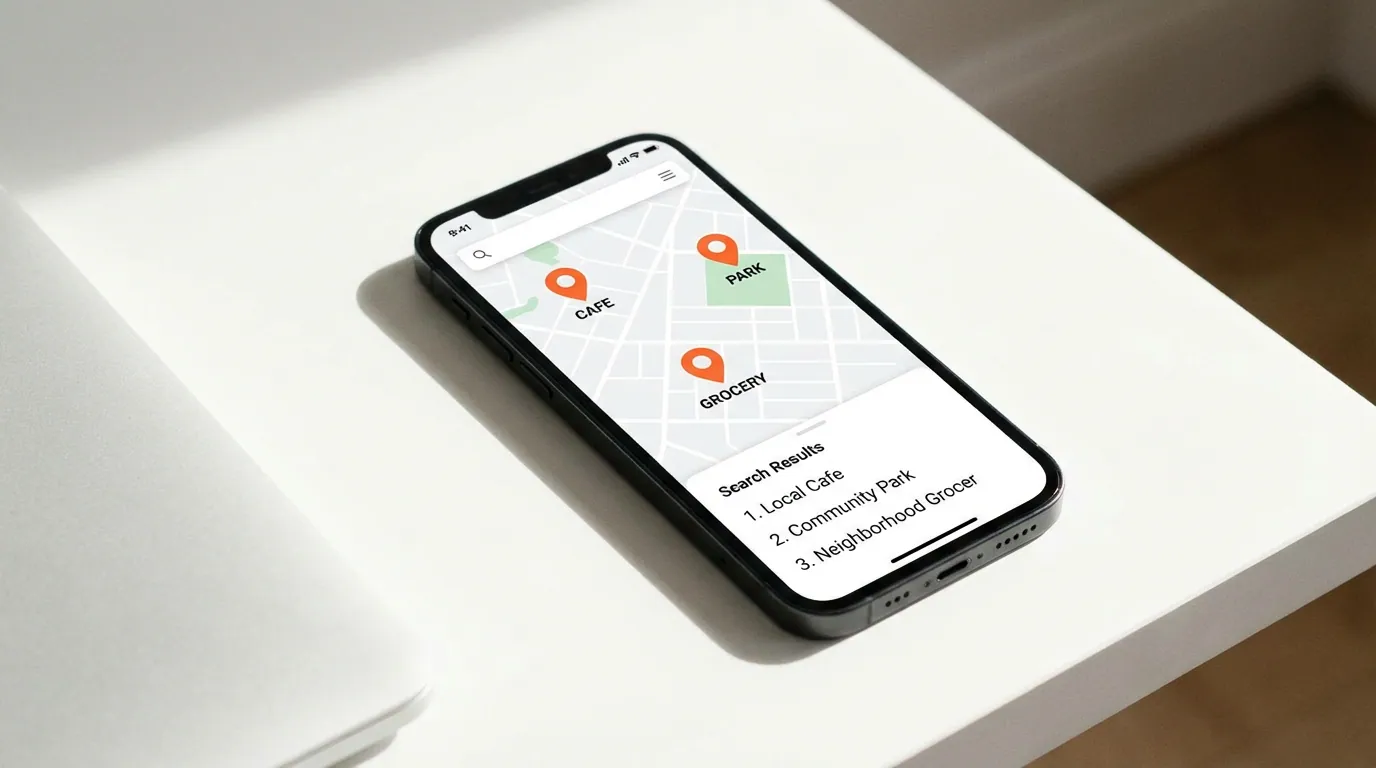
The Local Pack is the block of usually three businesses shown with a map above the ordinary results for searches such as "plumber Limassol" or "dentist near me".
On this site we call it the map results.
For a local business it is often the first thing a customer sees.
This article separates what Google states from what is only commonly believed, and shows which parts you can actually influence.
If you want the set-up steps for the profile itself, read our Google Business Profile guide.
If you want the whole job as an ordered list, use the local SEO checklist.
What Does Google Say Decides the Map Results?
Google's own help page on local ranking names three factors.
Relevance is how well a Business Profile matches what someone is searching for.
Distance is how far each business is from the person searching, or from the place named in the search.
Prominence is how well known a business is.
For prominence Google adds two concrete examples: how many websites link to your business and how many reviews you have.
It also says that more reviews and positive ratings can help your local ranking, and that businesses with complete and accurate information are more likely to show up.
That is the whole official list.
Everything else you read about map rankings, including this article, is either a reasonable reading of those three factors or an observation from practitioners.
It helps to know which is which before you spend money on it.
| Factor | What Google states | What you can influence |
|---|---|---|
| Relevance | How well your profile matches the search; complete, accurate details help | Primary and additional categories, services, description, a website page for each main service |
| Distance | How far the business is from the searcher or the place in the search | Nothing directly. You can only describe your real service area accurately |
| Prominence | How well known the business is, including links to its website and its reviews | Genuine reviews and replies, mentions and links from local and trade websites, a website people can find |
Relevance: How Does Google Match Your Business to a Search?
Relevance starts with your categories.
Google's guidelines ask you to choose the fewest categories that describe your core business and to prefer the most specific ones.
A locksmith should be listed as a locksmith, not as a security service.
The first category you pick is the one shown on the profile, so choose the service that brings most of your work.
The rest of the profile adds detail: the services list, the business description, opening hours and attributes.
Your website then confirms the same story.
A service page that names the service and the town in its title and first paragraph makes it plain what you do and where.
A quick test: search your main service in your town and look at the categories of the businesses shown.
If all of them use a category you have not chosen, check whether it describes your work better than yours does.
Distance: Why Can't You Appear Everywhere?
Distance is the factor you cannot change.
A searcher in Paphos will usually see businesses near Paphos, even when a stronger business sits in Limassol.
This is why a business with one address cannot expect to appear in the map results of every town it serves.
The tempting shortcuts are against Google's rules.
A virtual office, a P.O. box or a relative's address used only to get a pin in another town can lead to the profile being suspended.
A service-area business that visits customers should hide its address and set its service area instead, as our Google Business Profile guide explains.
What you can do for other towns is build them into your website: a useful page for each area you really cover, which can rank in the ordinary results below the map.
If you have real premises in several towns, each one can have its own profile.
Our article on multi-location local SEO covers that case.
Prominence: What Makes a Business Well Known to Google?
Prominence is the part that grows with time.
Google names links to your website and your reviews as examples.
In practice it reflects how often the wider web refers to your business: local news, trade associations, suppliers, partners, directories that people actually use.
Reviews are the visible part.
Google says more reviews and positive ratings can help.
It publishes no minimum rating and no target number, so the useful benchmark is the businesses already shown for your main searches.
A steady flow of recent reviews also matters to customers, who read the newest ones first.
Ask every customer, not only the happy ones, and never offer a discount or gift for a review.
Google's review policy forbids both incentives and selective asking.
Reply to reviews, good and bad.
Google presents replies as a way to show customers their feedback matters; it does not say replies change rankings.
Prominence cannot be bought in a week. It is the trace a business leaves when real customers and real local organisations talk about it.
What Is Commonly Believed but Not Confirmed?
Several claims circulate as ranking factors without any statement from Google behind them.
They may or may not matter.
Treat them as things to test, not rules to pay for.
- Keywords inside review text. Google has not said that the words customers use change your position.
- Clicks, calls and direction requests from your profile. These are the results you want, but Google has not confirmed that it ranks on them.
- Posting frequency. Posts can show offers and news to customers. No published statement ties them to ranking.
- Geotagged photos. Location data inside a photo file has no confirmed effect on the map results.
- A fixed number of directory listings. There is no published citation count that unlocks visibility. Consistent details on the platforms people use matter more than volume.
What Can Get a Profile Filtered or Suspended?
Some shortcuts do not just fail, they put the profile at risk.
Google's guidelines for representing a business and its review policy rule out the following.
- Adding service words or town names to the business name that are not part of your real name.
- Using a P.O. box, a virtual office or any address where the business does not actually operate.
- Showing an address customers cannot visit instead of hiding it and setting a service area.
- Creating more than one profile for the same business or location.
- Offering money, discounts or gifts in exchange for reviews.
- Asking only satisfied customers for reviews, or discouraging negative ones.
- Choosing categories that do not describe your core business in order to appear for more searches.
How Do You Check Where You Appear?
Your own phone is a poor test, because results change with your location and your search history.
Pick 10 to 20 searches that bring paying customers, such as your main service with your town, and check them from the area you serve.
Location-based rank tracking tools do the same at scale and show how your position changes across a town.
Then look at the outcome.
The performance view of your Google Business Profile shows how many people called, asked for directions or clicked to your website.
If you appear but nobody calls, the problem is the profile or the offer, not the ranking.
Our article on getting more calls from local search deals with that step.
How Long Do Changes Take to Show?
Corrections to categories, hours and profile details are read quickly, but positions settle over weeks rather than days.
In our Local SEO work the first effects usually show after 6–10 weeks.
Prominence, the reviews and mentions part, keeps building for months after that.
If you work in Cyprus, our guide to local SEO in Cyprus covers the Greek and English versions of your business details, and the Cyprus locations page shows how we handle each city.
Google tells you what decides the map results and leaves the weights private. Stop chasing rumoured factors and work on the three it names: be precisely relevant, be honest about where you are, and become known through real customers and real local references.
Want more calls from people searching near you?
Book a free Local SEO auditFrequently asked questions
Can I pay Google to appear higher in the map results?
No. Google says there is no way to request or pay for a better local ranking. Ads can appear above or inside the map results, but they are marked as ads and paid per click; they do not change your organic position.
Does adding keywords to my business name help?
No. Google wants your real-world name without added services or towns, and our Google Business Profile guide explains what can happen to a stuffed name.
Can I appear in the map results of a town where I have no address?
Rarely, because distance is one of the three factors. Do not create an address you do not use. Build a useful page for that town on your website instead, and open a profile there only if you have real premises.
Do replies to reviews improve my ranking?
Google has not said so. It recommends replying because replies show customers that their feedback matters, and that affects whether they choose you once they see you.
Does my website affect the map results?
Google names links to your website as part of prominence, and your website confirms what your profile says. A clear service page for each main service and town supports relevance.
How long until changes show in the map results?
Profile corrections are read quickly, but positions usually settle over weeks. In our Local SEO work first effects typically show after 6–10 weeks, and reviews and mentions keep adding up after that.