
Conversion Rate Optimisation (CRO) for HVAC Companies

Conversion optimisation for HVAC companies finds out why visitors with a breakdown do not call and why those planning a service do not book.

We test how clearly after-hours surcharges are shown, where the financing information sits and whether the call button stays in view on a phone during heat waves.

See the full Conversion Optimisation service·See what we offer HVAC companies

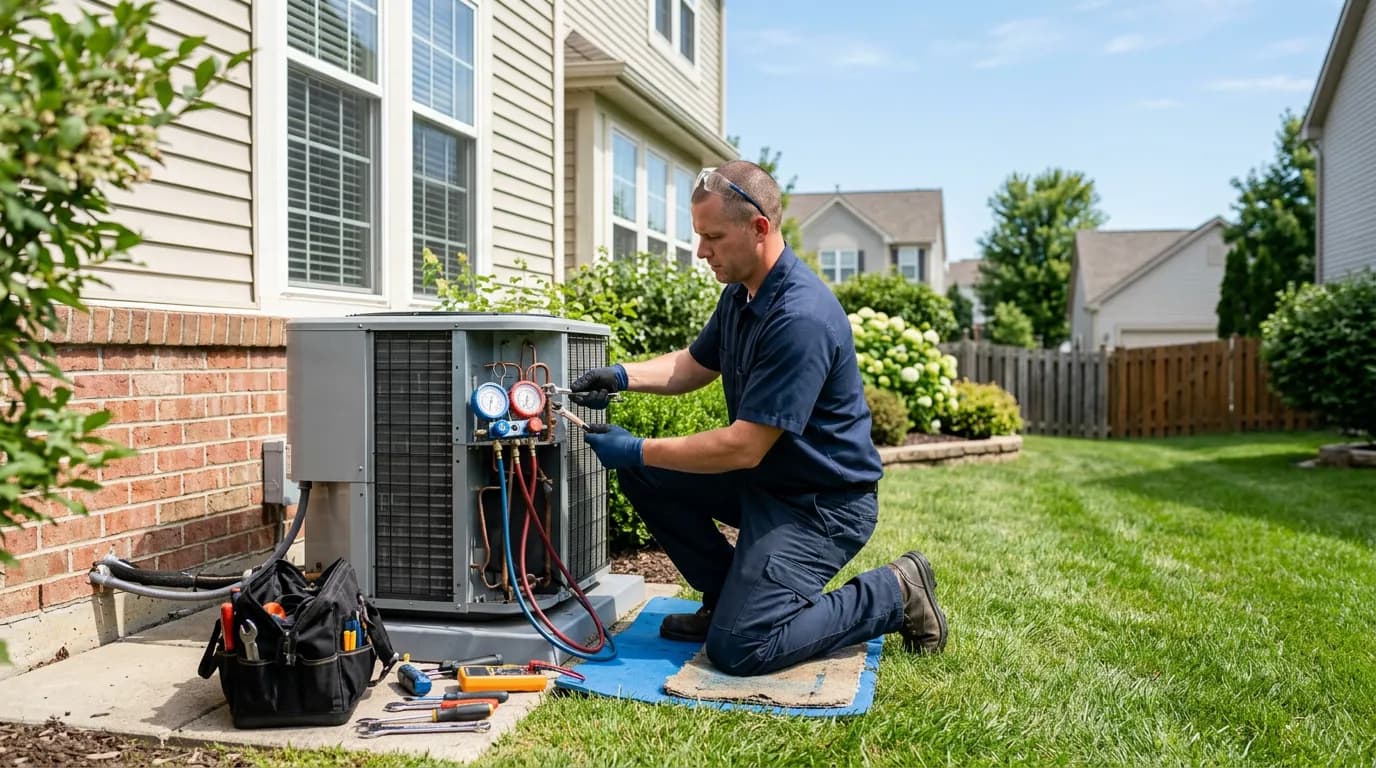
Heating and air conditioning technician adjusting the climate controls in a modern home, in soft navy and amber tones

Online challenges for HVAC companies

Call-out fees that surface only later lead to refunds, and cluttered booking tools frustrate people with an emergency.

We rank the tests by the extra booked revenue they can bring, and each test stops if call quality or booked jobs drop.

Manufacturer rules punish vague claims in ads and on key pages

Warranty and brand rules limit what you can promise, so your wording must stay precise.

  • Vague claims bring weak clicks, ads that Google rejects and pages that lose buyers who know the products.
  • Write within the brand rules from the start, not as an afterthought.
An expensive order with no proof beside the button

A new heat pump or boiler is a large sum, and the visitor hesitates right where the order starts.

  • Training, badges and short lines from reviews placed elsewhere on the page do not reach that moment.
  • A long form that never says why it asks the age of the equipment feels like a sales trap.

Conversion Optimisation approach for HVAC companies

For HVAC companies, the conversion plan starts from what earns trust in your area: reviews of pre-season servicing, installations finished nearby and certified technicians.

Recordings of real visits during heat waves (session replay) show us what to test.

Every promise on the page has to match what your team can really deliver.

Two phone layouts, tested apart

We test emergency pages that lead with the phone number and servicing pages that lead with the booking calendar, with the phone number still in view.

  • We measure each layout on its own type of page, so both urgent calls and planned bookings meet fewer obstacles.
  • The call button stays visible, so a visitor who gives up on the form can still ring you.

Forms in steps

Postal code and the age of the equipment come before the longer fields, and each step says why it is asked.

  • The first steps collect what is needed to route the request; the rest appears only once the request is clearly a fit.
  • A short line by each field explains why you ask, which helps more people finish the form without any extra incentive.

Clear surcharges

We test short sections on after-hours fees, with a link to the full terms.

  • Visible fees set budget expectations before anyone talks to the person who takes the call.
  • The link to the full terms serves those who want detail without weighing down the emergency path.

Technician proof next to the main button

Badges, training and short quotes from reviews ease the worry before an expensive booking.

  • Proof sits right next to the call and booking buttons, where people hesitate.
  • The proof changes with the type of service, so it stays on topic and current.

Conversion Optimisation process for HVAC companies

01

Measurement set-up

We set up tracking of taps, form steps and calls, plus heatmaps (pictures of where people tap and scroll), on the pages where people call or book.

02

Research

We separate visits about emergencies from visits about planned servicing.

03

Round of tests

A/B tests, two versions of a page shown to different visitors, run one after another, with safety limits on call quality and booked jobs.

04

Rollout

We put the winning versions live and brief the people who answer your phones on the new wording.

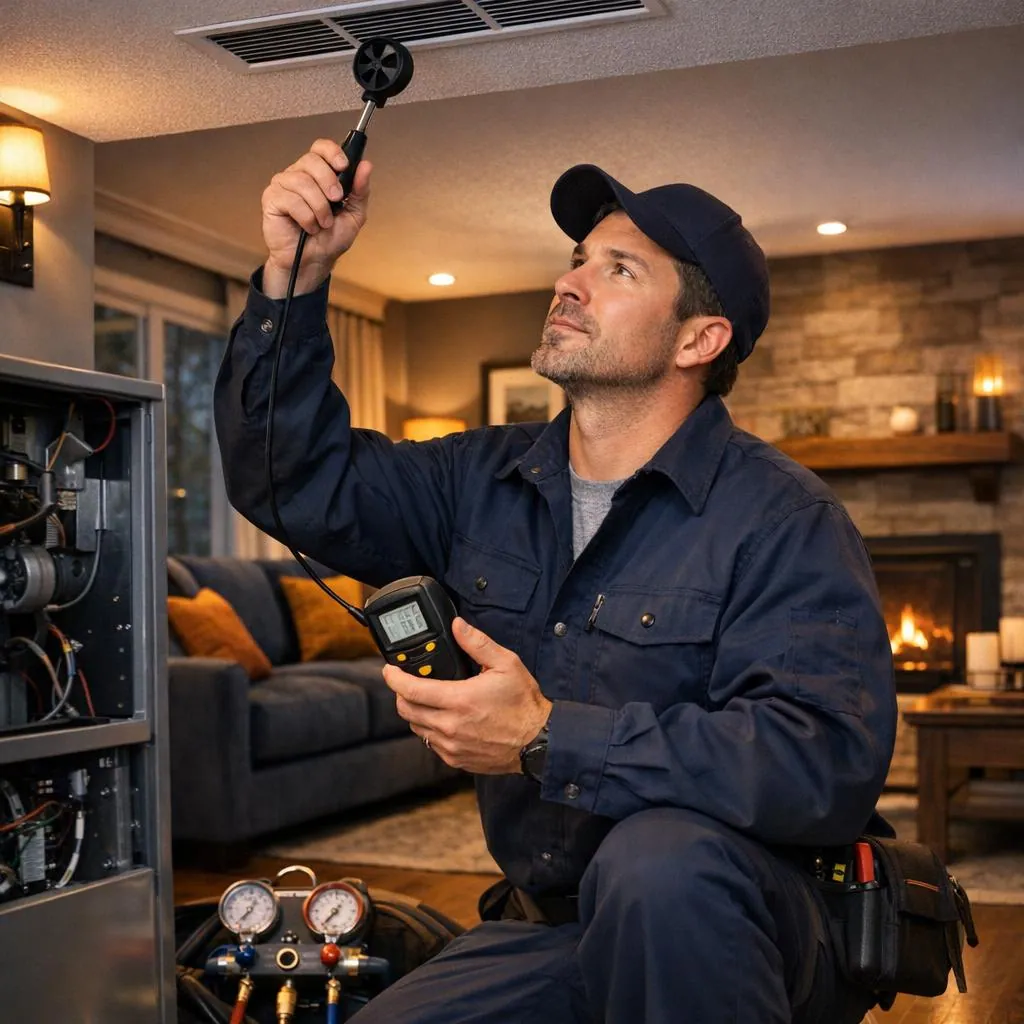
Home heating and cooling service with an airflow check and seasonal equipment in a stylish interior

How we measure results for HVAC companies

We count booked jobs for each version of a page, not just clicks.

22%
higher share of mobile visitors who call from the heating and cooling emergency pages
16%
fewer refunds after testing clearer ways to show extra charges
8
tests a quarter

Example figures from client projects with HVAC companies. Outcomes vary by market, offer and how consistently the plan is carried out.

Questions about Conversion Optimisation for HVAC companies

Plain answers about Conversion Optimisation, written for HVAC companies.

Usually a more prominent phone number on emergency pages and a postal code check before the longer form.

  • Both are quick to build and show early whether the right people get through.

It depends on traffic.

  • Pages that get ad traffic usually reach a reliable result faster than those that rely on search alone.
  • Seasons matter too: a test that started in a heatwave is checked again in a quiet month before we keep it.

It may filter out poor clicks and raise the share of real opportunities you win.

  • A visible weekend or out-of-hours fee also saves an awkward conversation at the door.

The hours you answer, the areas your engineers reach that day and a plain note on the call-out charge.

  • A homeowner with no heating decides in seconds, and those three facts answer the doubts that stop the call.

General questions about Conversion Optimisation, the same for every trade, are in our FAQ.

FAQ: Conversion Optimisation

Need a growth plan for HVAC companies?

Share your goals and constraints. We will turn them into a practical Conversion Optimisation plan for HVAC companies.