
Website Development for Dentists

A dental practice website should put the dentists' credentials, treatment timelines and booking first, before stock photos.

We design for the phone first: a patient in pain sees the call button straight away, and a patient planning treatment finds the dentists and the consultation booking.

See the full Web Design and Development service·See what we offer dentists

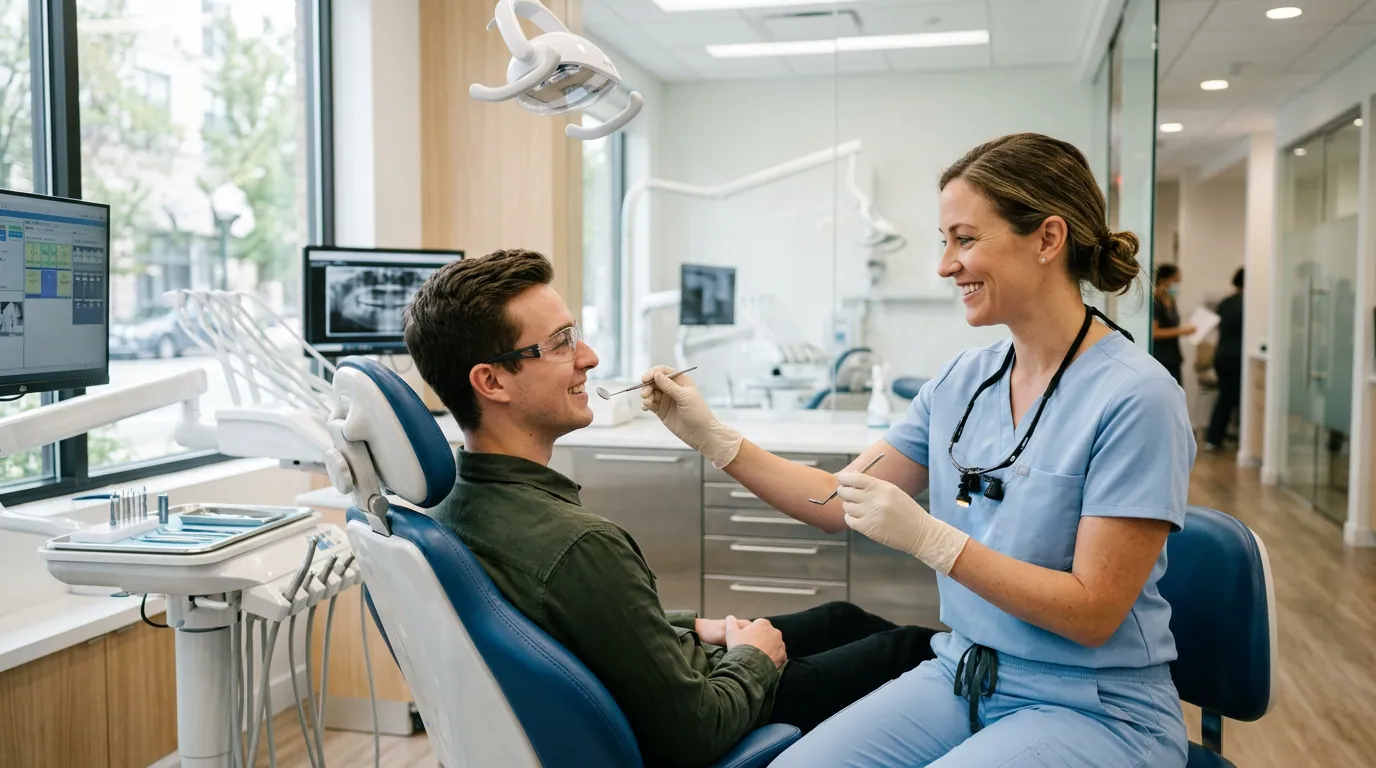
Dentist and patient in a consultation at a bright, modern clinic with navy and amber details

Online challenges for dentists

Template dental sites look alike and hide what makes a practice different.

Slow pages lose patients who compare practices on their phone in the car park.

High-value treatments need their own path, not one general page

People search for dental treatments by name. Someone looking for implants or clear aligners is not a casual “dentist near me” click.

  • One page that tries to cover everything attracts browsers, while patients ready for major treatment go elsewhere.
  • Give each group of treatments its own trustworthy path, from the first search to booking.

Booking forms that ask for health details too early

Careful patients stop when a form on the site asks about their medical history before anyone has seen them.

  • Fields that do not match the practice system leave reception retyping every request.
  • Without one question about pain or swelling, an urgent case waits in the same queue as a check-up.

Web Design and Development approach for dentists

For dentists, the website plan starts from the proof people look for: dentist credentials, photos of treatment results and clear standards for equipment and sterilisation.

We connect booking and forms to the common dental practice management systems when it saves back-and-forth with reception.

Video backgrounds and heavy animation stay off the emergency pages.

Treatment pages built from shared sections

Implant, aligner and cosmetic pages share building blocks but keep their own questions and answers, outcomes and structured data.

  • Shared sections save build time without flattening the differences patients expect between major treatments.

Dentists and team on the first screen

Credentials, professional memberships and languages spoken appear before generic smiles.

  • This works when it shows credentials and details patients can check and actually care about.

Speed targets for every page

We compress images, load non-essential scripts later and make the main content of the booking pages appear quickly on phones.

  • Speed matters because it gets patients to booking or contact before a slow page breaks their trust.

Forms that fit your practice system

Form fields match the booking rules of your practice management system and leave out health data that is not needed.

  • Forms collect only what the team needs to book safely, without asking for clinical detail too early.

Web Design and Development process for dentists

01

Patient paths

We test the emergency path and the planned-treatment path on real phones and tablets.

02

Design and integrations

We match the form fields to your practice system and check the wording against the healthcare advertising rules.

03

Build and speed checks

We build a test version with analytics and speed targets and check it before launch.

04

Training

Your staff learn to update promotions and dentist bios safely.

Price: a website for dentists with 1–3 pages starts at €650, and a company website with 5–7 pages at €1,300, plus VAT.

Dental instruments prepared for a treatment in a clean, calm clinic

How we measure results for dentists

We measure completed bookings and taps on the phone number, with urgent and planned treatment counted separately.

When we relaunch a site, the page addresses that bring search traffic are kept.

1.6s
faster first screen on the booking pages
32%
higher share of mobile visitors finishing a booking after we made the site easier to use
2.3×
faster from arriving on an implant page to making the call

Example figures from client projects with dentists. Outcomes vary by market, offer and how consistently the plan is carried out.

Questions about Web Design and Development for dentists

Plain answers about Web Design and Development, written for dentists.

We connect common practice management and booking tools where their interfaces for other software (APIs) allow it.

  • Where they do not, the form sends a clear request to the front desk with the treatment and preferred times, so no one retypes it.

Not if old page addresses are redirected, the content keeps its substance and we monitor results after launch.

  • Treatment pages that already bring patients, such as implants or emergency care, keep their address or get a direct redirect.

Yes, when you treat patients in several languages.

  • Each language version gets the markup that tells Google which language a page is in (hreflang).
  • Each version names the dentists who really speak that language, so patients know who to ask for.

Only with documented consent.

  • Without a signed release we use no image in which a patient can be recognised.
  • Close-ups of a smile before and after treatment, cropped to the teeth, often show the work well enough.

A standard site takes 4–8 weeks, and a targeted repair of an existing site can be quicker.

  • A practice with several locations needs longer, and we plan the switch so that booking keeps working.

General questions about Web Design and Development, the same for every trade, are in our FAQ.

FAQ: Web Design and Development

Need a growth plan for dentists?

Share your goals and constraints. We will turn them into a practical Web Design and Development plan for dentists.