
SEO for Dentists

SEO for a dental practice has to keep the treatments patients weigh up for weeks, such as implants and aligners, apart from hygiene and emergency visits.

Most patients search for the treatment before they look for a practice, so a site that is found only by its own name reaches them after they have chosen.

See the full SEO service·See what we offer dentists

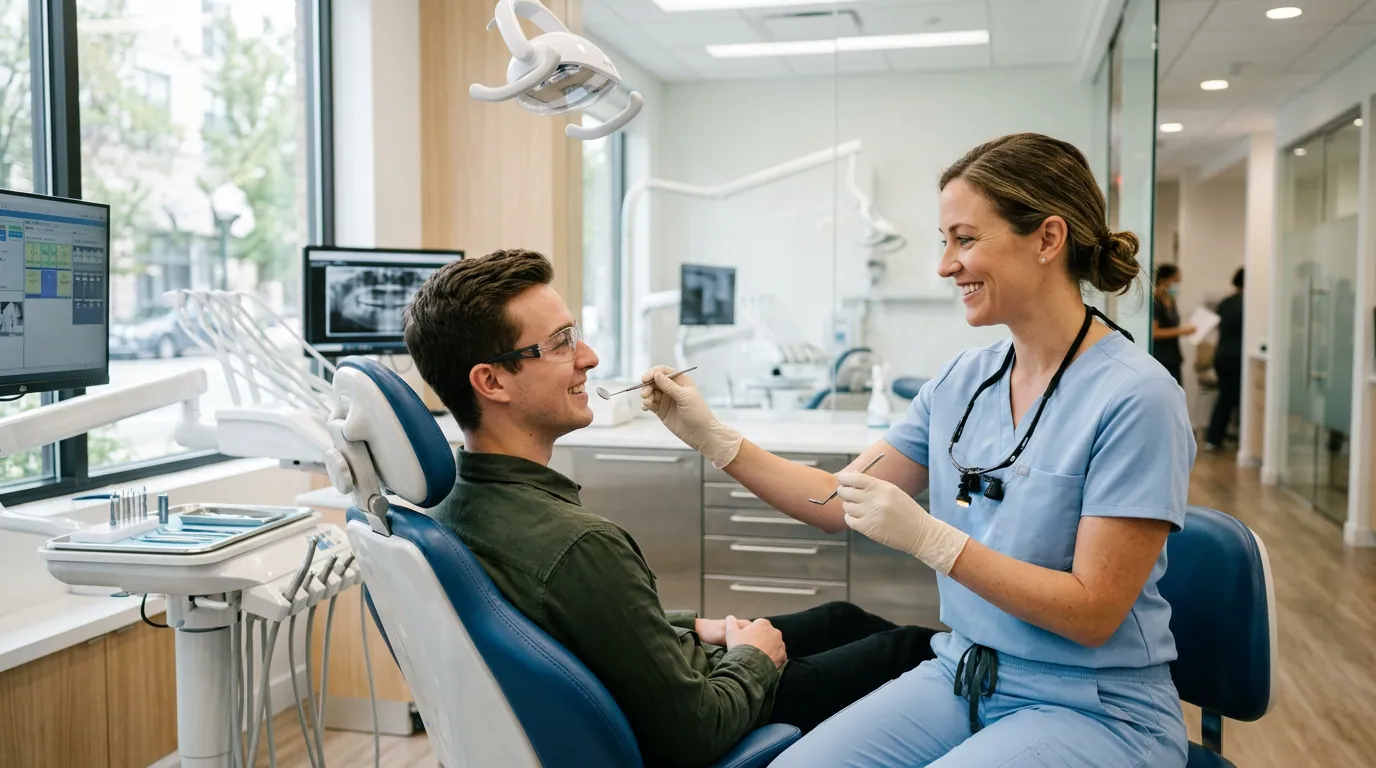
Dentist and patient in a consultation at a bright, modern clinic with navy and amber details

Online challenges for dentists

A single general page cannot rank for detailed implant searches and for children's hygiene at the same time.

In a practice with several dentists, Google gets a blurred picture when the names on the site and in the page code (structured data) do not match.

High-value treatments need their own path, not one general page

People search for dental treatments by name. Someone looking for implants or clear aligners is not a casual “dentist near me” click.

  • One page that tries to cover everything attracts browsers, while patients ready for major treatment go elsewhere.
  • Give each group of treatments its own trustworthy path, from the first search to booking.

Implant price searches answered by clinics abroad

Searches for what an implant costs are often answered by clinics in other countries that publish one low price for everything.

  • A patient compares that figure with a local practice that publishes none and assumes the worst.
  • Pages that explain what a local price includes, from the scan to the follow-up visits, are rarely written.

SEO approach for dentists

For dentists, the SEO plan starts from the proof people look for: dentist credentials, photos of treatment results and clear standards for equipment and sterilisation.

We match the plan to how the practice really runs: how many patients each dentist can take, the dental labs you work with and the financing you actually offer.

A group of pages for each treatment

Implants, aligners, sedation and gum treatment (periodontics) each get a group of pages with their own questions and answers.

  • Links lead from the medically accurate guide pages to the consultation page, and no two pages compete with the same main heading.

One name per dentist, one page per office

We spell each dentist's name the same way on the bio page and in the page code (structured data).

  • With several offices, each location page is about its own area, so each office can be found for the area it really serves.
  • Patients and Google then see one practice, not several half-matching versions.

Clear pages for insured and self-paying patients

Patients who compare what their insurance covers and patients who pay themselves, with or without financing, get separate pages.

  • Plain wording means fewer pointless calls to reception, and the previews Google shows match what people ask about insurance.
  • No page promises cover you cannot confirm.

Treatment guides patients read before booking

Patients research implants, aligners and sedation for weeks before the first call.

  • We write guides on who a treatment suits, how long it takes and what recovery looks like, checked by the treating dentist and linked to the consultation page.

This page is about search results outside the map. The map, your Google Business Profile and local searches, such as “dentist near me” and emergency toothache searches by area, have a page of their own: Local SEO for dentists.

SEO process for dentists

01

Map of treatments and appointments

We note which dentist performs which treatment, how long new patients wait and which financing partners you work with. For each group of treatments we check which competitors Google shows today.

02

Site structure and content plan

We plan the page addresses, draft bios that show real credentials and experience, and prepare the question-and-answer markup (FAQ schema) so it matches the clinical facts.

03

Build and check

Technical fixes, text and structured data go live in batches. We test the forms on phones and check that tracking respects patient privacy.

04

Consultations by treatment

Every month we match Search Console data (Google's report on the searches that show your site) with the outcome of each enquiry in your CRM, the system where you keep enquiries. We expand the treatment groups that fill your most profitable appointments.

Price: SEO for dentists from €550 a month plus VAT, three-month minimum.

Dental instruments prepared for a treatment in a clean, calm clinic

How we measure results for dentists

We report consultation requests by treatment, new-patient forms started and how good the calls were.

Success looks like more implant and aligner enquiries from patients who come prepared for a consultation, and fewer people who only wanted the cheapest hygiene visit.

214%
more requests for implant and aligner consultations from unpaid search results
31
key treatment searches in the top 10 results after the pages were grouped by topic
17%
less reception time wasted on enquiries that do not fit the practice

Example figures from client projects with dentists. Outcomes vary by market, offer and how consistently the plan is carried out.

Questions about SEO for dentists

Plain answers about SEO, written for dentists.

It depends on local competition, the history of your domain and how deep the clinical content is.

  • With SEO, first signals usually come after 8–12 weeks and a clear effect after 4–8 months, and competitive treatment searches also need steady reviews and visible expertise.
  • We forecast by treatment group and city.

Each dentist gets their own bio, marked up in the page code where the rules allow, and the name, address and phone number stay the same across locations.

  • Bio pages never copy each other.

We set up analytics cautiously, and forms ask for no health details beyond what booking requires.

  • A form asks which treatment a patient is interested in, not about their symptoms or medical history.

Consultation requests by landing page, call outcomes where calls are tracked, and booked treatments by marketing source.

  • You see which page brings implant consultations and which brings check-ups, because those are worth very different amounts to the practice.

Yes.

  • A consultation page explains what to expect, the scans and the payment options.
  • An emergency page focuses on pain relief, real same-day availability and careful wording.
  • Cosmetic work such as veneers gets a page of its own as well, and the pages link to each other where it helps.

General questions about SEO, the same for every trade, are in our FAQ.

FAQ: SEO

Need a growth plan for dentists?

Share your goals and constraints. We will turn them into a practical SEO plan for dentists.