
Digital Marketing for Opticians
An optician lives on two linked things: the booked eye exam, and the glasses or lenses sold around it.
Eye tests, frames and contact lenses are three searches, each on its own page.
Brands, easy exam booking and in-store service, so an exam turns into a sale.
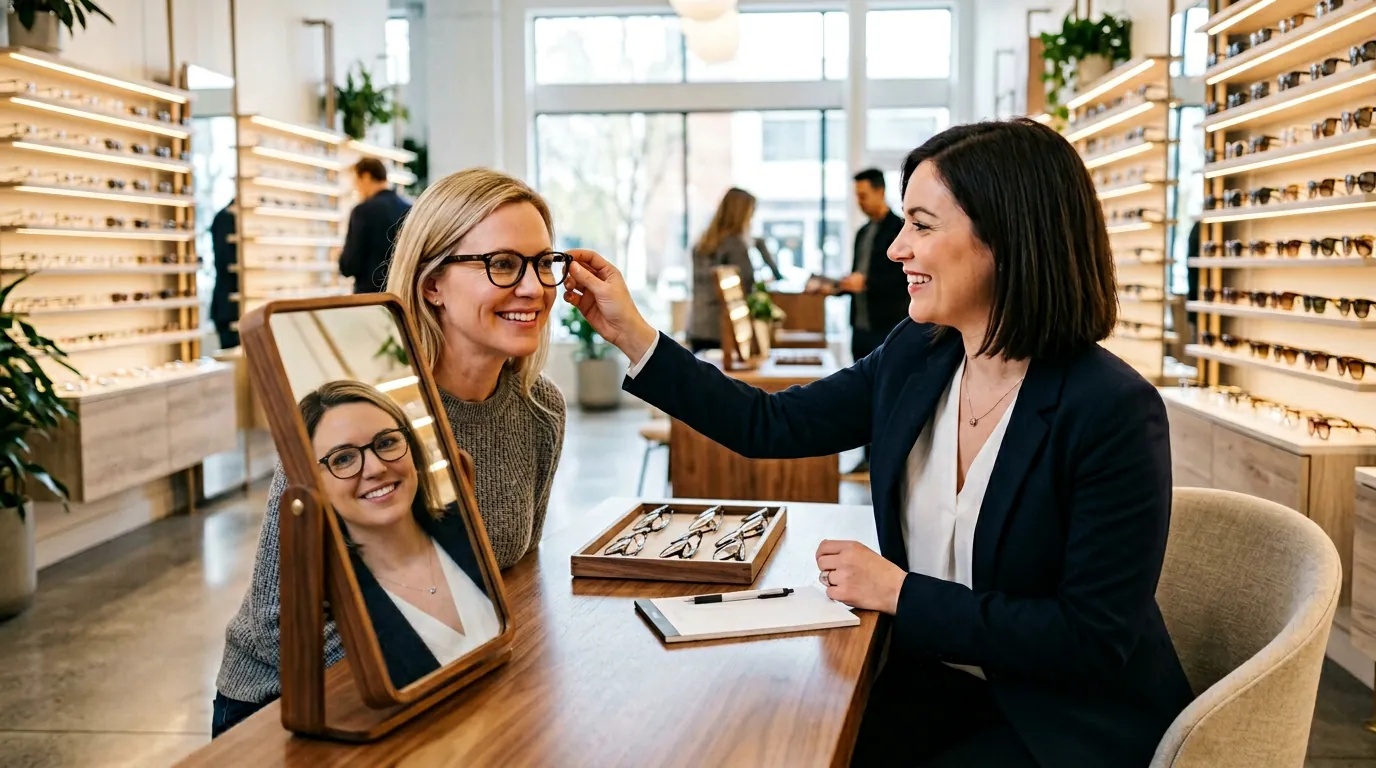
What decides whether opticians get found on Google
Trust is decided on the first screen: the map, the photos, the reviews and how quickly someone can book. A brochure in a PDF rarely wins that moment.
- Eye tests, frames, and contact lenses draw different searches, so one page misses all three.
- Frames compete with online sellers, so the value of your shop and your brand range must be obvious.
- The booked eye exam is the way into the sale, so booking an exam has to be effortless.
- Booked eye exams and the glasses and lenses sold around them are the real return.
For opticians, FOXVISITS treats growth as one system: clear service pages, a Google Business Profile people can trust, and reports that count booked visits.
The eye test first
Your website, Google Maps and ads set up for eye tests, frames and lenses, with booking made easy.
Eye tests and lens sales
We report booked eye tests and the sales that follow them, not website traffic.
Our services for opticians
Each card opens the plan of one service for opticians: what we do, how we check the work and how we report results.
Service page
SEO
Separate pages for eye tests, frames and contact lenses.
See the planService page
Local SEO
A Google Business Profile ready for eye test searches in your area, since the test is often where a sale begins.
See the planService page
Google Ads
Separate ads for eye tests and for frames, measured by booked tests and lens sales.
See the planService page
Web Design and Development
A fast site where booking an eye test is simple, with the frame brands you stock and the in-store service an online shop cannot offer.
See the planService page
AI & GEO
People ask AI tools about eye tests, glasses or contact lenses. We list your eye tests, frame brands, lenses and opening hours on your pages and profiles, so an answer about opticians nearby has current facts.
See the planService page
Link Building
We look for links on local sites and in eye health guides, chosen to match a practice that competes on care rather than price.
See the planService page
Lead Generation
A reminder before the eye test and a follow-up after it with frame and lens options.
See the planService page
Social Media Marketing
Your frame brands and how you fit glasses, shown with a link to book an eye test.
See the planService page
Conversion Optimisation
An eye test booking button on every page, and plain reasons to visit the shop instead of ordering online.
See the planFour problems we fix first for opticians
Trust shows in seconds: photos, reviews and how easy it is to book. What Google shows should match the visit people get.
Searches split between eye tests, frames, lenses and urgent problems.
- Eye tests, frames and contact lenses each get their own page.
- Separate ads for people booking a test and people shopping for glasses.
Trust depends on professional qualifications and knowing the products well.
- Optometrist qualifications and what an eye test includes, shown first.
- Your range of brands and lens options, explained by the people who fit them.
Product pages often miss local searches and give no clear reason to get in touch.
- Product pages that name your shop and say why to visit in person: fitting, adjustment and aftercare.
- A way to book a fitting or ask a question from every product page.
Booking an eye test and buying glasses do not carry over smoothly between phone and computer.
- Simple online booking of an eye test and a call button, on every device.
- A booking confirmation by email or text message, so people can finish on any device.
Our plan for opticians, step by step
- 1
Separate exams, frames, and contact lenses
Each is a different search and a different sale, so each gets its own page.
- 2
Make exam booking effortless
The exam is the way in, so booking one is front and centre.
- 3
Showcase brands and in-store value
Frames lose to online unless your range and value are obvious.
- 4
Measure booked exams and lens sales
We track booked exams and the sales that follow them.
What we measure and report for opticians
This is what we track from the first month and show in every report.
Eye tests tracked
Eye test bookings and how many lead to a sale of lenses, by where they came from.
Eye care searches
Where your pages show in the local results people click when they search for an eye test, frames or lenses.
Cost per eye test
Spend per booked eye test, measured against your own starting point.
These cards show what we track and report for opticians, not invented numbers. Real client results are in our case studies.
Questions about marketing for opticians
Results from other sectors
We have not published a case study from this sector yet. These two come from other sectors and show how we work and how we report results.
Home Services
From Zero Online Presence to the Top 3 in Local Search
A new cleaning company in Germany had nothing online. We built its online presence from zero, and it now shows in the top 3 of local results for its main service phrases.
Read case studyAutomotive Locksmith
Local GTA Locksmith: 15,574 Google Ads Conversions Since 2020
Local GTA Locksmith has run Google Ads with FOXVISITS since May 2020. Six years of that account add up to 15,574 conversions at $12.86 each. SEO only started in February 2026, and by that summer organic search was carrying part of the load as well.
Read case studyRead more on the sector pages: Digital Growth for Home Services Businesses, Digital Marketing for Emergency Services
Related articles
Article
Local SEO Checklist for Small Business (2026)
A step-by-step local SEO checklist for small businesses: one master sheet of your details, the Google profile, your website, listings and reviews, in the order that pays off first.
Read moreArticle
Google Business Profile Optimisation Guide (2026)
How to set up a Google Business Profile correctly and keep it accurate: verification, categories, description, photos, posts, reviews and a 30-minute monthly routine.
Read moreArticle
How to Get More Calls From Local Search
How to turn local search visibility into phone calls: the path from search to call, profile and website changes that remove friction, call tracking and answering the phone.
Read moreNeed a fuller diary, not just more noise?
Start with an audit for opticians: your Google Business Profile, the paths through your website and how people book. First you get clear priorities in plain words. Advice or hands-on work follows only if it fits.