
Landing Page Conversion Tips That Increase Enquiries
A checklist for one landing page: match the ad, state the offer, show proof early, keep the form short, test on a real phone, know when to wait.
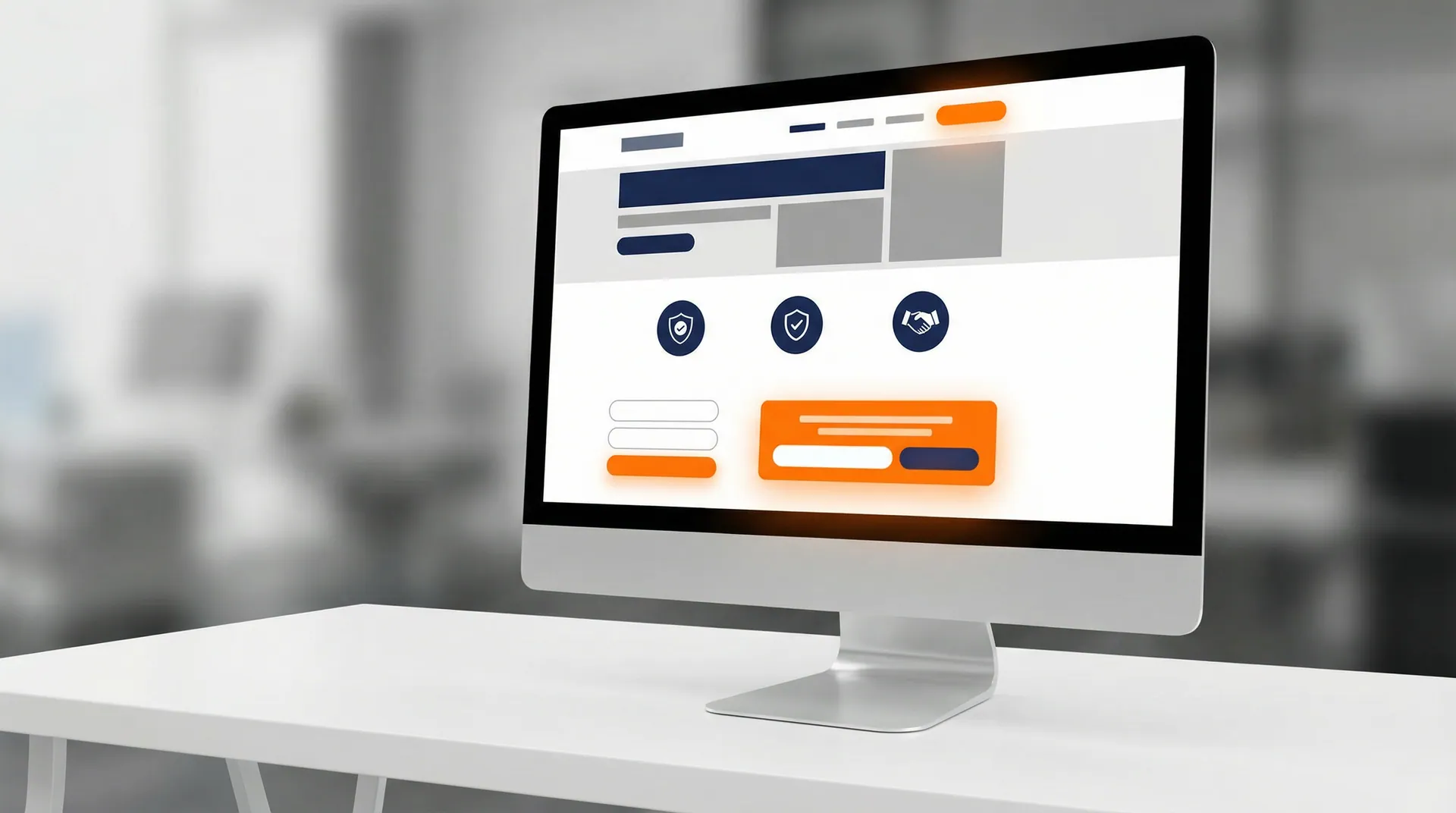
A landing page is the single page a visitor reaches from an ad, an email or a link, built for one action.
Most landing pages lose people not because the traffic is poor, but because the page does not answer the visitor's doubt quickly enough.
This is a checklist for that one page.
For the whole website, see our website conversion guide; for running tests properly, see the conversion testing framework.
Does the Page Match the Ad?
The headline must repeat the promise of the ad or link that brought the visitor.
If someone clicks "emergency boiler repair in Limassol" and lands on a general page about heating services, they leave.
Keep one purpose per page.
If an ad campaign has three different offers, it needs three landing pages.
In Google Ads this also helps the ad and the page stay relevant to each other.
Is the Offer Clear in One Sentence?
State what the visitor gets, how soon, and what they need to do.
Replace vague claims with specifics: "Free on-site quote within 48 hours" says more than "Quality service you can trust".
Say what is included and who it is for.
A page that answers those questions before they are asked gets more enquiries and fewer wrong ones.
Conversion lifts usually come from reduced uncertainty, not louder persuasion.
Is There Proof Before the Visitor Scrolls?
Put a small amount of proof at the top: a review rating, a short testimonial, a recognisable client logo or a concrete result.
Then add more evidence lower down for people who need it: examples of work, how the process works, answers to common objections.
Is the Form as Short as It Can Be?
- Three to five fields for a first enquiry.
- A button that says what happens, such as "Get my quote".
- One line on response time and one on privacy next to the button.
- A phone number as an alternative for people who would rather call.
- A thank-you page that says what happens next.
Does It Work on a Real Phone?
Open the page on your own phone, on mobile data, and fill in the form.
Check that the headline and button are visible without scrolling, that the text is readable, that fields are easy to tap and that the keyboard does not hide the button.
Emulators on a desktop miss things a thumb finds in seconds.
When Should You Change the Page, and When Should You Wait?
Fix obvious problems at once: a broken form, a headline that does not match the ad, a missing phone number.
For anything less certain, change one thing at a time and give it enough visits to judge.
Changing several things every week leaves you with no idea what worked; the testing framework explains how to decide.
A good landing page is specific, clear and easy to act on. Start with the match between ad and page, then tighten the offer, the proof and the form. Small focused changes often do more than a redesign. If the page is for a Google Ads campaign, our Google Ads service includes the landing page review.
Want a second pair of eyes on your landing page? We review it against this checklist and list the changes that matter most.
Get a free landing page reviewFrequently asked questions
What is a good landing page conversion rate?
It depends on the channel, the offer and the market, so a general benchmark says little. Measure your own page and work on improving it against its own starting point.
Should we remove the navigation menu?
For a focused campaign page, a simpler menu often helps. Keep the links that build trust or are legally required.
How long should a landing page be?
As long as it takes to answer the visitor's doubts. A free quote needs little; an expensive service needs more proof and explanation.
Do heatmaps replace A/B testing?
No. Heatmaps show where people click and scroll; a test shows whether a specific change made a difference.